

internal quietude.
letting the noises quieten and the expanse within widen, so that I could come truly alive.

I enjoy watching vlogs. There is something comforting about immersing myself in another’s stream of consciousness, attending to her motions across the ordinary errands of her daily lives. It feels almost intimate — like a mirror image of my own reality, one that unveils the miscellaneous significances that I tend to overlook in the my own.
Occasionally, a moment from such a montage leaves a vivid imprint on my mind. In a recent one that I watched, the vlogger was cleaning dishes while reflecting on overstimulation from social media. “It takes a lot these days to be stimulated by our own thoughts and imagination,” she said — and I began to wonder: what does it imply, when our own minds, in the absence of constant input, no longer feels sufficient to spur us?
Erich Fromm, in The Art of Loving, describes how we are losing the ability to sit in stillness with ourselves. As a repercussion, we find ourselves perpetually vacillating between boredom and anxiety. The book was written more than half a century ago but somehow feels like a startlingly true reflection of our current malaise. It requires a certain degree of courage to confront the dread of being completely left alone to one’s own mind, without external distractions to numb the discomfort. This courage, this ability to abide in stillness, is apparently one gradually slipping through our fingers.
Because it’s true. With the acceleration of social media, noise has come to overcrowd our every waking moment. The modern age is one of overflowing information, and henceforth, distraction. Never has it been easier to tap into the frequency from other sources — we could tune into the sound from another channel at nearly anytime, an array of entertainments at our disposal — and never has it felt more difficult to cut through the noise in orderto attend to one’s own frequency underneath.
Leslie Jamison: “one siren call of social media is that we might see our desires given shape before we even have to shape them ourselves”. We are, quite often, told what to think before we have a chance to think about the matter for ourselves. The noises contours our beliefs so subtly that its manipulation eludes us. What's left of the difference between a thought of our own and an unexamined idea which infiltrates our consciousness without awareness, until eventually it looks no different from our own?
Of course, it’s not always a dangerous thing. Like strolling down the street in sight of a view that inspires you in some unexpected way, encountering the glimpse of a story / a photo / a copy of a moment that makes you feel more expansive than you were just a moment ago. Or, in the case of this essay, a fragment from another person’s train of thought, serendipitiously stumbled across on the internet, became the catalyst for my own stream of consciousness. But overstimulation instead leads to desensitization, overwashing us with lukewarmness until we are all but too distracted to pinpoint what it is that we actually feel and desire.
I realized that I’m not only on social media when I’m on social media. My thoughts bend around it, even during the hours when I’m offline. My mind becomes a frenzied reflection of the incessant noises that I’ve been consuming: the sound bursting through as a screeching static inside of my head even when I’m alone in quietude. My desire to create, too, becomes paralyzed amidst all the clamor. To think of it, creativity ripples out from the ability to resonate, and a certain amount of queitude is needed in order to tune in and hear.
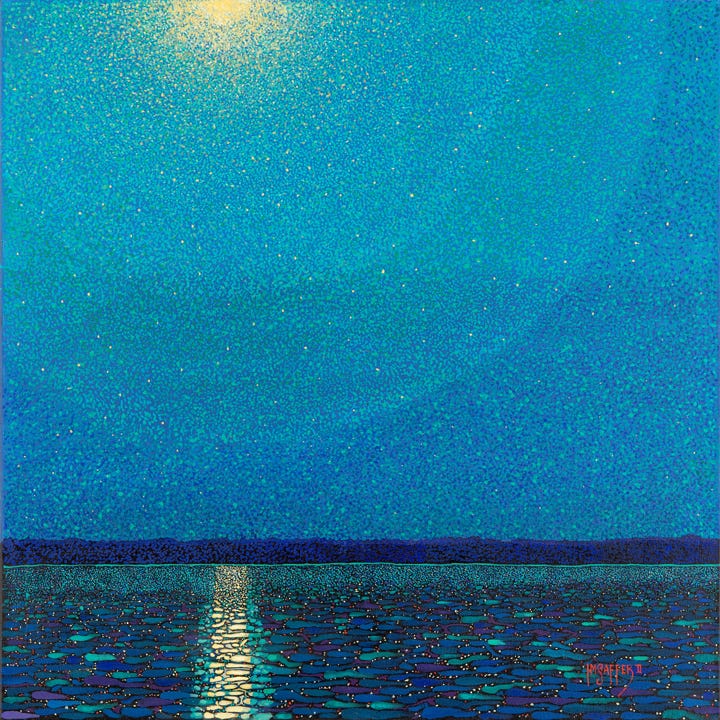
If one needed the darkness in order to see the heavens, might daylight be a form of blindness? Could it be that sound was also a form of deafness? If so, what was silence?
— do not say we have nothing, Madeleine Thien
When it begins to quietens all around me, I think of how silence is its own form of music — the most indispensible rhythm out of all. The pause between tunes, the caesura in between lines.
My theory is that the emerging popularity of ideas such as self-care and taking time for oneself, which were seldom heard of a decade back, is causally interlinked with the fact that our modern lives have become more permeated by noises than it ever has before.
The sounds are constant, clamoring at us from every direction. But even as the external resource of information amplifies at an exponential pace, the internal resources — that of space and attention — remains constant. The necessary constraints to being human do not escape us, regardless of the ostensible omnipotence of tech.
Deep down, the acceleration and abundance of content are wearing us thin. We tend to recognize the indispensibility of something by the malaise which lingers in its absence, hence the value of quietude is revealed by the overload of noise. The choice of intentionally stepping back from the noises for the sake of restoring our internal resources, then, becomes an essential act of survival.
Internal quietude, to me, is rooted in the ability to tune out when necessary. The Buddhist author Stephen Batchelor speaks of a practice of solitude: the expansion of a nonreactive space within us and the cultivation of inward autonomy. It regards the cultivation of an interior spaciousness, so that we refrain from becoming utterly vulnerable to the infiltration of external stimulants.
We are at risk of losing what we do not make a choice of holding onto. When external noise deafens us from the music of our solitude, it feels like we are losing grip on something deeply important.
The constant access to technology, or specifically the internet, penetrates our every waking moment with information, eroding our internal quietude. But like many, I have also taken comfort in a myriad of things it offers. I know that it’s capable of feeling like a safe refuge and being a wondrous engine for creativity. After all, tech is merely a tool, whereas any tool is neutral by nature: capable of both destructive and life-giving potentials.
All I’m recognizing is that internal quietude — which implies the necessity of boundary and space in contrary to the all-permeating nature of technology — is something that I must intentionally prioritize and choose to cultivate for myself. Because these noises around me will not be the ones to choose it for me: the forces which drive them resemble cravings of extravagance and speed. It’s against their nature to advocate for stillness and quietude, yet these very things are indispensable to our humanity.
The advancement of technology meant greater freedom, and henceforth greater responsibility. The ask, then, is to leverage it in such a way that it empowers rather than exerts power over us. It’s a choice to seek mental clarity and restore our internal autonomy, amidst the prevailing noise. It’s a matter of gracefully holding together the opposites: gravity and lightness, stillness and motion, silence and song.
“If there’s pleasure in action, there’s peace in stillness.”
― Sea of Tranquility, Emily St. John Mandel
Because more and more, I’m beginning to see how we cannot be simultaneously elsewhere. There is only here, there is only now. There is only a limited amount of attention that we could choose to pour into what’s around us. When noise overgrows the sanctuary of our internal quietude, our presence become fragmented and the vividness of everything before us diminishes. So, even while the entrances into a myriad of other worlds may lie at my fingertips, I will decide that somehow, it’s abundantly enough to merely be here.
There are books I want to read, people whose laughters ring like remedies that I want to sink into deeper presence with, and an abundance of astounding sights that I want to linger before. I want to tread slowly across each passing moment, letting the noises quieten and the expanse within widen, so that I could come truly alive.
Some quotes + articles I think you'll enjoy:
All of humanity's problems stems from not being able to sit in a room alone - Blaise Pascal
The Art of being Alone
How to leverage the feeling of loneliness— the yearning to connect with your fellow humans— into art:
https://fs.blog/being-alone
"tech is merely a tool, whereas any tool is neutral by nature: capable of both destructive and life-giving potentials."
Note: tech should be subtractive — it should free up our mind to pursue the things that matter, not clog it.
Civilization advances by extending the number of important operations which we can perform without thinking of them.
- Alfred North Whitehead
“If there’s pleasure in action, there’s peace in stillness.”
Note:
Happiness Is peace in motion;
Peace is happiness at rest.
https://nav.al/peace-motion