

garden.
one of the most worthwhile things you could do is to let what you love consume you.

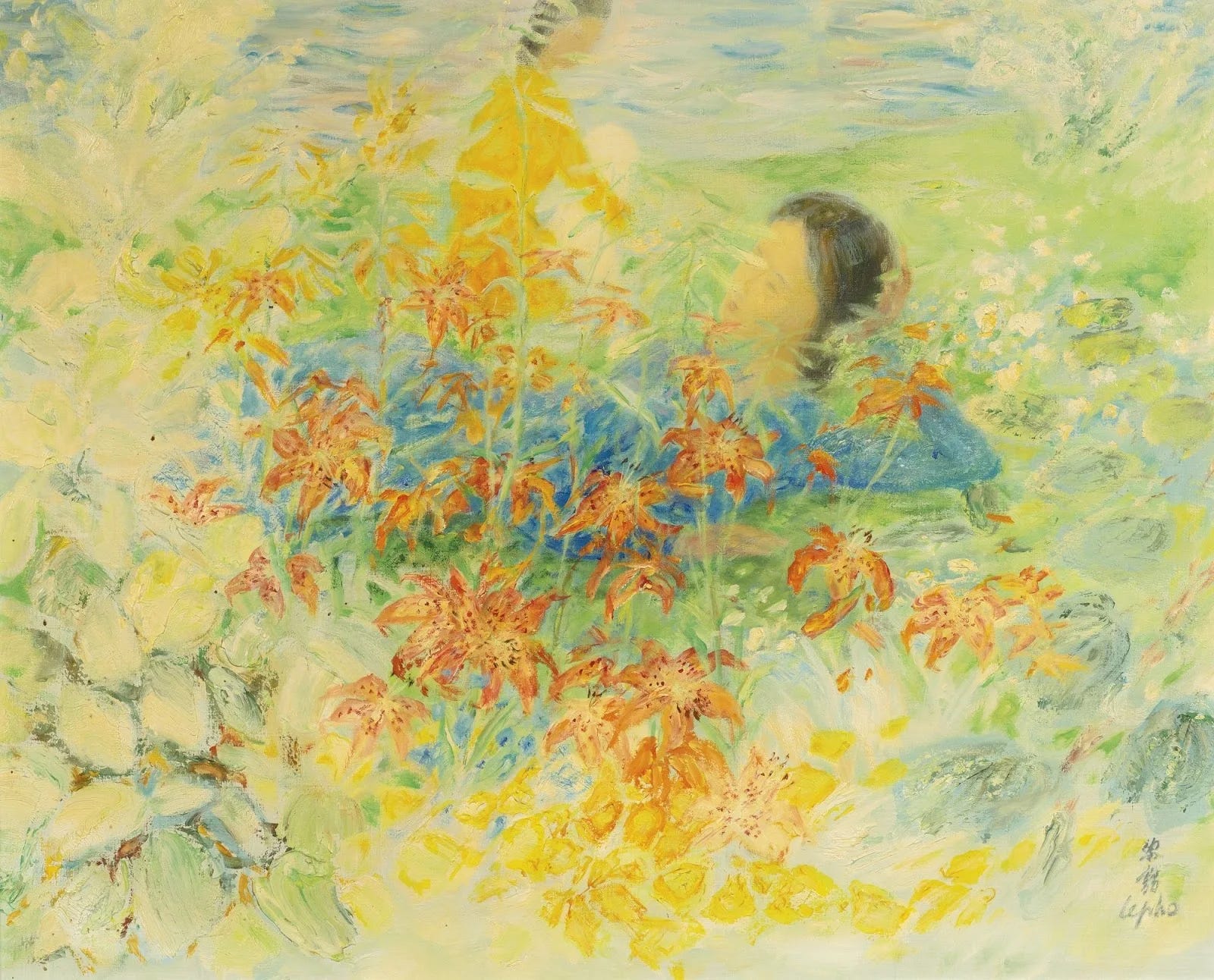
I remember passing by beautiful gardens while jogging on a summer afternoon, several years ago. Vibrant assemblages of hydrangeas and roses and marigolds, at their full blooms, fusing into a stunning panorama in my periphery. Yet a weight expanded across my chest as I became reminded of the tedious effort behind this beauty. I thought about the gardeners, wondering why they have chosen to burden themselves so.
Intellectually, I understood that the gardeners showed up willingly. The joy they derived from gardening made all the sweat and tedium worthwhile. But I struggled to comprehend it deep down. At the time, I’d been living my life as though it was a problem to be optimized. I refrained from activities lest it fit inside my arbitrary definition of productivity. The idea of doing something purely for enjoyment grew increasingly foreign to me, until it verged absurdity.
On that day, standing before the gardens, the vivid hues of summertime glory blurred before my eyes while I lingered like an outsider gazing in through the frosted glass, far removed from the beauty of it all. Suddenly I was startled by the recognition of the person I’d become: someone whose first instinct, upon witnessing a masterpiece, was to wonder — What’s the point?
For the years to come, this memory imprinted itself in my mind as a scene of dissonance, urging me to trace the apparition of something lost and once-cherished. To rediscover what it meant to to devote myself to something, simply for the love of it.
Growing up I was taught to stay zhuān xīn, to not let my attention stray from the tasks placed before me. Being a good student meant engaging as little as possible with matters outside of academics, and being a good student meant everything.
Because it’s too easy to become consumed, isn’t it? Staying up late to finish a novel. Sketching between the page margins when I ought to be paying attention in class. In the absence of careful pruning, hobbies overspread like weeds that overcrowd a garden, obstructing the growth of anything more practical.
Dutifully suppressing propensities in the name of discipline, I drifted away from my hobbies until they grew to resemble the antiques forgotten away in an attic. While I ostensibly claimed possession over them, the layers of dust and cobwebs reveal how far removed they have become from my actual life.
The pro of this way of operating is that you become ruthlessly pragmatic, unhesitant to uprooting anything that distracts from efficiency. The con is that guilt begins pricks through you, like a thousand tiny needles, whenever you try to engage in anything that you genuinely enjoy. And so, one wildflower at a time, you strip the garden bare, until all that remains is a barren yard.
Hobbies have the capacity of wholly capturing your attention, thus liberating you from the awareness of time passing. The reality is that I rarely allow the passage of time to elude me. Instead, I’m constantly seeking an end to justify the means — the end being some tangible measure of competence or productivity, and the means being the expenditure of effort and time.
I balked at the resources squandered by hobbies because the reward they reaped was deep-seated and intangible. It doesn’t resemble the capitalistic notion of progress via an upwards trajectory. Instead, it’s a portal into self-expansion. What do you care about? When do you feel the most joyous and alive? What matters to you and why does it matter? These are questions that no one else could answer for you. Yet they pulse inside of you, in the dark of night, restlessly so.
There is no clear blueprint to unravelling the path inwards. The only thing becoming clearer to me, over the past years, is that you cannot find your way home while actively repelling what you love. Hobbies — the pursuits that you naturally gravitate towards — are trailheads to the unravelling of your inner topography.
All this time, while I equated value with only efficiency and utility, the true meaning of hobbies eclipsed me. Instead, I’m tracing my way back to the childlike days, when I regularly lost track of time engulfed in my sundry hobbies. Wide-eyed, oblivious to the ticking of the clock, submerged in the making of something frivolous yet beautiful.
When writing, I’m relearning how to take my time with what I love. Painstakingly rearranging my sentences. Searching for the precise word to anchor my amorphous thoughts. Reading, re-reading. Drafting, re-drafting. Again and again, until it all clicks and flows. In doing so, I begin to remember why the artist returns to the blank canvas after all: Not merely for the painting that it would ultimately become, but for the gliding of each stroke. The act of making it beautiful, in itself, is worth lingering for.
Half a decade ago, on a late spring evening before I began university, my dad and I talked about possible career paths — about the often-inevitable clash between the ideal of doing what you love and the less ideal reality.
My dad brims with curiosity over just about anything. My mom and I joke about him being a walking encyclopedia, somehow equipped with knowledge about the most obscure topic. When asked, he just shrugs, I learned about it because it seemed interesting. We could converse extensively about a plethora of random topics, yet he falls quiet whenever I asked him about the content of his actual work.
In our conversation, he said that even while what you love may not take the central stage of your life, you must not relinquish it. Despite everything, you carve out enough space for it to flourish and grow. And there comes a day, a long way down the road, when you recognize this to be what’s been sustaining you, all along.
The imagery of a garden emerges to mind: At the end of a tiresome day, you lay your head to rest under the towering elm tree. Around you, squirrels and bunnies jostle across the meadows. The butterflies weave through the wildflowers and singsong of sparrows echo from above you. All the time and effort that you devoted towards what you love — all the while, it’s been a garden in the making.
I return to the words of Mary Oliver again and again: “You only have to let the soft animal of your body love what it loves.” I’ve spent so much of my life judging what I genuinely enjoyed as frivolous, reprimanding myself to instead redirect focus towards endeavours that are ostensibly more fruitful. Yet these days I’m realizing: one of the most worthwhile things you could do is to let what you love consume you.
Because at the end of the day we are not gears and cogs. We are feverishly curious creatures and connoisseurs of niche obsessions. We act, commit, become engulfed — all for the love of it. The weeds that I tried to destruct at various points of my life all blossom back, stubbornly, until I eventually recognize them to be the wildflowers at the very soul of my garden. With defiant resilience, they have endured. And all this time, all that I needed, was merely to give them the space and nourishment to unbridledly grow.

📚 /
Earlier this month, I finished reading Heavy by Kiese Laymon. And just last week, I finished reading Against the Loveless World by Susan Abulhawa and You Could Make This Place Beautiful by Maggie Smith.
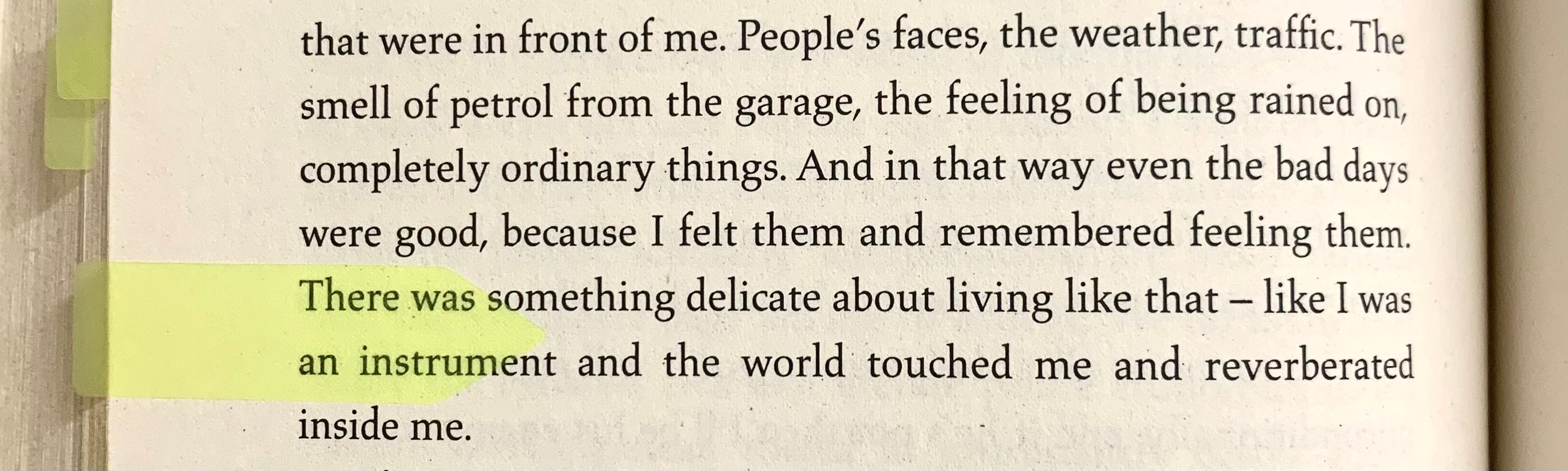
A few days ago, I started reading Beautiful World, Where Are You by Sally Rooney. I didn’t go in with high expectations, because I’d felt somewhat conflicted about Normal People, which was the only other work I’d read by the author. But so far I’m enjoying it a lot!
🎵 /
I’ve been listening to Hazlett’s discography on repeat. One of my favourites, and also the song that first introduced me to the artist, is Missionary Feeling. It reminds me of mountainside mist and the precipice of yearning.
📸 /
My friend and I have a tradition of scrap-booking in cafes together. Occasionally, I’d bring my sketchbook and colour pencils instead.
In other words, I’ve been trying to get back into drawing again. It’s one of my earliest hobbies and one that I’d abandoned the most often. Whenever I begin drawing, it still feel like a form of homecoming, and I’d wonder why it’s taken so long for me to return to these sketchbook pages.


-
sincerely,
kun.
This is beautiful. You write so eloquently!