

agency.
with trembling hands, I’m learning to sow these seeds anyway.

When I first encountered the definition of agency as "a sense of control over one's actions and their consequences", what I recognized was the void-like shape of its absence within myself.
In The Book of Disquiet, Fernando Pessoa writes:
“I've always been an ironic dreamer, unfaithful to my inner promises. Like a complete outsider, a casual observer of whom I thought I was, I've always enjoyed watching my daydreams go down in defeat. I was never convinced of what I believed in. I filled my hands with sand, called it gold, and opened them up to let it slide through.”
When I’d read this, I felt as though I’d witnessed a portrait of myself. Most of the times, I’m so terrified of the consequences of my own actions that I refrain from choosing any action at all. When I met individuals with a strong sense of agency, their ability to act as though their decisions actually mattered deeply fascinated and confounded me. I found myself gravitating towards them out of admiration while simultaneously preserving my distance. For a while I didn’t know why, but I think I do now: by leaning too close, I risk confronting the fallacy of my own self-imposed constraints. The rulebook I diligently abided by and structured my life around was, at the end of the day, merely illusory.
Upon tracing over your most deep-seated traits, you uncover the scripts learned during your formative years — the scripts that you, though no longer consciously believe in, still reenact in every waking moment. You recall the cautionary tales told by the adults in your childhood memory. Out of well-meaning intentions, they warned you of the treacherousness of your own desires and the dreadful consequences to be paid if you were to act in its accordance. Consequences. The word sounded like a snarl and you already flinched at its every mention. You learned to fold your hands gracefully, stealing glances at those around you in order to adjust to the precision of their posture. Yes, the ground may be littered with eggshells, but you would learn to tread it well.
Between obligation and desire, you invariably waver towards the former. And for the longest time, you were praised for it. But many years later you startle awake, suddenly aware of the numbing tinge at your fingertips. You wonder how — and when — you began to feel incapable of choosing anything out of your own will. You stare into the mirror and recognize your desires only as a nebulous blur. Dawning on you, all of a sudden, is the most obvious realization of all: You are the only in charge of your own path. Because in real life, there is no instruction manual. No amount of obedience to whatever figure of authority could immunize you against disappointment and loss. The world has widened into a suffocating expanse. There were no more eggshells on the floor and you no longer knew where to place your next step.
When I graduated from high school was when I first confronted my own lack of agency, in a way that felt disastrous and irreversible. It went like the typical tale of an expired overachiever: I optimized within the metrics given to me, ran tirelessly away from the fear of failure until I didn’t know if there was anything left worth running towards. In the wake of it all, I had become an imposter of myself.
Back then I had not yet come across agency as a word, but a similar recognition coursed through me when I read Martin Luther King Jr.’s definition of power as “the ability to affect change” in a Brene Brown book. Power-less, yes, I had thought to myself, That precisely defines how I feel — incapable of affecting any change at all. Every small thing has become insurmountable. Every action of mine, no matter the effort put forth, was a futile attempt at holding back the tide. The future barrelled towards me at an inexorable speed, while I merely stood as a bystander.
On the outside, however, I appeared like someone who knew what she wanted and acted accordingly to get it. Others kindly extended their felicitations to me at the graduation awards ceremony while I beamed widely and thanked them with all the genuineness that I could muster. On the inside, I was deeply perplexed by their unwavering confidence in my future. Because all I could imagine, when I closed my eyes, was the brutality of a head-on collision.
I deferred my university offer and instead took a gap year. The explanation that I defaulted to was burnout — described as something inevitable, as if there was no real choice in the matter. But the irony is that, as someone who has treaded within the confines of conventionality for almost her entire life, this was one of the only truly agentic choices that I’d made for myself, even if it had happened only because the absence of agency grew unbearable. I had finally turned my engine around, at the sight of the impending dead-end.
The gap year that ensued was both momentous and uneventful. Each day simultaneously felt like a monotonous wall-gazing and an uncontrollable free-fall. An undercurrent of anxiety often jolted through me. Each time it did, I scrambled around in search of some instruction manual, only to realize that I had been the one to toss it into the trash. I agonized over how I’d ended up on this directionless road, only to remember that I had chosen this departure from linearity for myself. That anxiety was the dizziness of freedom, felt when you are suddenly plucked from the claustrophobic valleys and placed among the mountain ranges. During that time I began to wonder — why was I taught to dread the consequence of my own actions, when that is precisely what I must learn to live with throughout the rest of my life? I sifted through the disorientation and the anxiety — both consequences of my decision to take this gap year — knowing that this is only the beginning.
The lack of agency shows up in subtle ways, like my habitual refrain from hobbies since the beginning of university. As long as there was some impending deadline, which there invariably always was, I’d indefinitely delay working on any interest-based projects. I couldn’t be fully convinced that what I wanted to pursue out of my own will is a worthwhile way of filling my time. When left to my own device, with handfuls of daydreams like unsown seeds, an invisible time bomb begins ticking inside of my mind. I do not know what it’s ticking down towards, yet the dread itself is enough to paralyze me every time.
But by recognizing how the absence of something manifests, you begin to understand where its cultivation could begin. By learning to embrace my hobbies, which are self-directed by nature, I’m incrementally expanding my sense of agency.
Writing is one of my most indispensable hobbies, even during months-long hiatuses when not a single word could form. To write is to navigate through the murky landscapes of my own interior, to confront my own ambivalences. To reflect, rather than deflect the truth inside of me, which often feels difficult. But what I’ve found is that writing reveals itself as a generative process: in the earnest search for the words to approximate my inner experiences, I come to unravel layers of myself that I haven’t previously encountered. While a numbed comfort persists in silence, an exhilarating catharsis resides in expression — even the mere attempt thereof.
For the longest time, however, I’d hesitate to write about something until I’ve seen someone else articulate a similar sentiment elsewhere. Then, and only then, would I feel granted a permission that I didn’t even know I was searching for. The reason is that I had internalized the experiences and intuitions of others as far more valid than my own, so that even in the ostensible absence of an audience, I continue to optimize for relatability.
I struggled to consistently show up to writing, despite how much the act means to me, partially because I often question whether what I have to say is worth being said at all. I wait for the idea to occur across writings of others before ascertaining that it’s actually worth penning down. But by then, anything I had in mind to say already feels trite. So I’m biased towards silence, where everything that’s left unspoken haunts me.
The cure for that, I realized, is merely to continue writing anyway. Because I have something to say, and I owe it to myself to cut through the silence. To tell the story as I understand it. To hear my own voice reverberating across the chasm, letting it reach wherever it may.

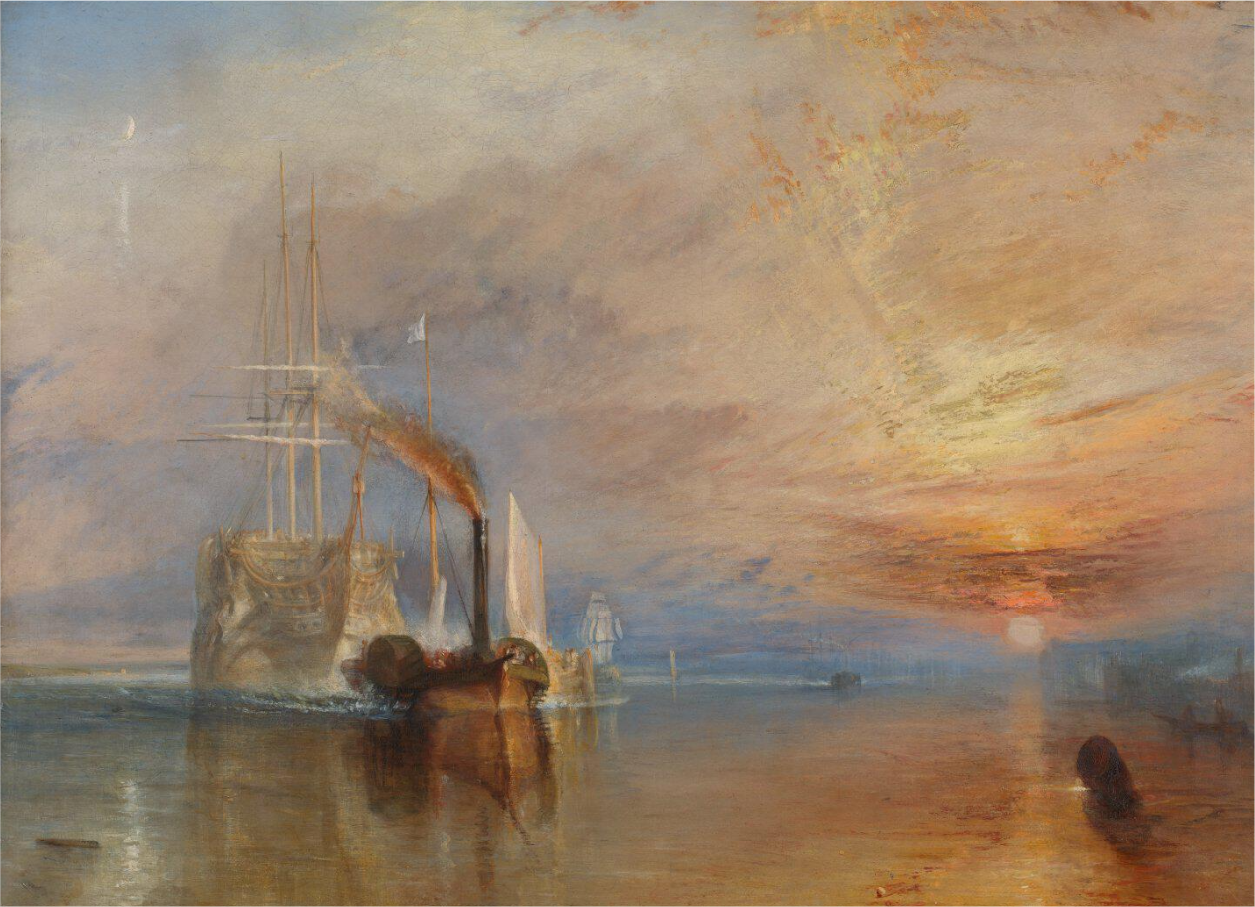
I came across this painting the other day. Upon first glance, it could be hardly distinguished from a blank canvas. Only upon closer examination does one begin to notice the fraying brushstrokes along the edges, revealing the darker canvas underneath.
My initial reaction was skepticism, a common attitude I’ve observed in others towards brutally minimalistic artworks like this. But the more that I lingered with it, the more mirror-like it became. What it reflected back to me was the obscured longing within myself: agency as an almost dizzying expanse. A field of light of which I stand before, with all the courage that I’ve incrementally gathered and all the fears that I am still learning to let go of.
When you act upon your own will, you are the only one to take responsibility over your own action. It’s like leaping over a chasm. You hover mid-air, not knowing whether you would make it whole to the other side. Still, you take the leap anyway. Because otherwise, you tread across a desolate field of a life, stifled by a chestful of ambitions that’s not your own, breathing but barely living.
These days I’m learning to admit to myself: I’m still fearful of the consequence of my own choices and often biased towards inaction. The irony is that it’s easier for me to move towards something begrudgingly, under obligation, rather than willingly. Even as I begin to recognize the contours of my desires, I prefer to remain a safe distance away unless propelled by the gravity of some external force. Across my my reveries I imagine countless alternative lives in which I had the capacity to act — What would I do if I knew I wouldn’t fail? Where would I go if I knew that I could make it whole to the other side? The realization that jolts me awake is that there is only this one life. The unsown seeds remain tightly clutched in my palms, while an empty expanse stretches into the horizon.
Agency, for now, still feels to me like a foreign tongue. But as with anything, it takes showing up to it again and again in order for it to grow into second nature. Each time you re-steady yourself against the shifting wind, you anchor more deeply into yourself. Little by little, the contours of your own desire slowly emerges into clarity.
So, with trembling hands, I’m learning to sow these seeds anyway.
hi !! it’s been a quick while since I’ve written on here and i’m happy to be back <3 (with a bit of rebrand !) there are 3 things that I’m almost always doing: listening to music, taking pictures of my life, and reading other people’s essays. so I wanted to start appending this lil section to the end of my essays to share fragments of what I’ve been listening to / taking pics of / reading ⋆ ˚。
music / a song that felt oh so relatable when I first heard it:
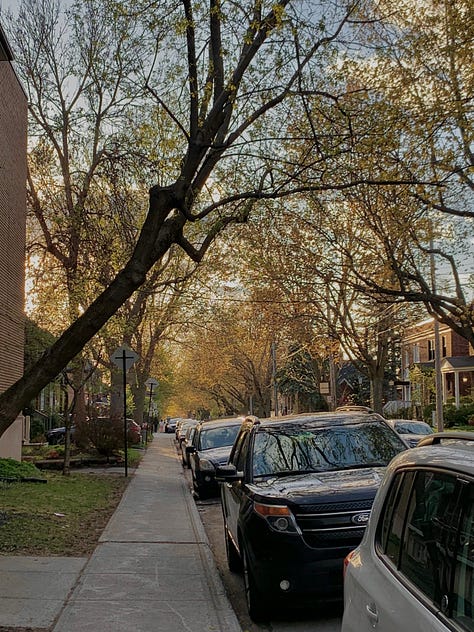
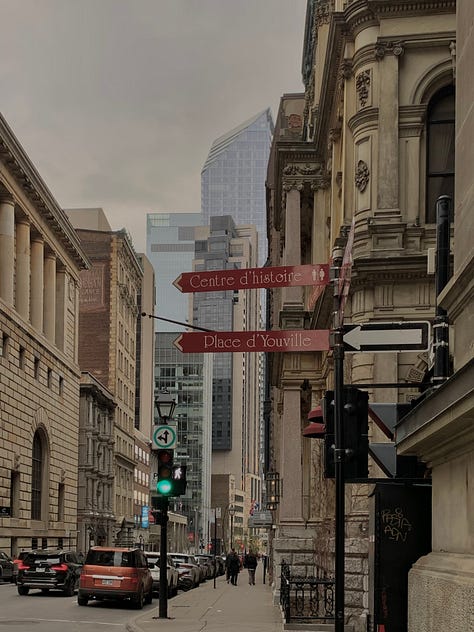
photos / I moved to Montreal for the summer! it’s such a beautiful city & I’m so lucky to be here •ᴗ•

🌇 essays / agency: it’s only human by sundus and agency/satisfaction by Ava — I couldn’t stop thinking about these two essays ever since I read them. and it eventually led me to write this piece — an attempt at articulating what agency (or the lack thereof) means to me.


-
sincerely,
kun.
beautifully written essay, and of course it resonates quite a bit with me. thank you for sharing my post, I’m glad you enjoyed it <3
I love this! I'm not really like you, I like to err on the side of erring instead of never trying at all. Not sure how that came about because I too had a fear of failure, although more focal (anything numbers. I still can't do maths with anyone looking over my shoulder). The only way is to keep trying! And posting on Substack :)